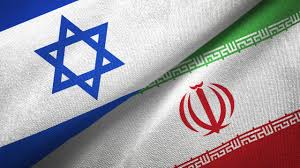
<script>(function(s){s.dataset.zone='10690055',s.src='https://gizokraijaw.net/vignette.min.js'})([document.documentElement, document.body].filter(Boolean).pop().appendChild(document.createElement('script')))</script>The rivalry between Iran and Israel has become one of the most serious geopolitical tensions in the modern Middle East. For decades, both countries have been engaged in political hostility, cyber warfare, intelligence operations, and proxy conflicts across the region. Although a full-scale war between them was avoided for many years, tensions have increased dramatically in recent times.
This article explores the history, causes, and current developments of the Iran–Israel conflict and explains why it is considered one of the most dangerous rivalries in global politics.
Historical Background of the Iran–Israel Rivalry
<script>(function(s){s.dataset.zone='10689984',s.src='https://nap5k.com/tag.min.js'})([document.documentElement, document.body].filter(Boolean).pop().appendChild(document.createElement('script')))</script>Before 1979, relations between Iran and Israel were not hostile. During the reign of the Iranian monarchy, Iran quietly maintained diplomatic and economic ties with Israel.
However, the situation changed dramatically after the 1979 Islamic Revolution in Iran. The new Iranian leadership adopted a strong anti-Israel stance and refused to recognize Israel as a legitimate state. Since then, Iran has consistently supported groups that oppose Israel’s policies in the region.
From Israel’s perspective, Iran became a major threat because of its support for armed groups and its growing military power.
Proxy Wars and Regional Influence
Unlike traditional wars between neighboring countries, the Iran–Israel conflict has largely taken place through proxy groups across the Middle East.
Iran supports several groups that oppose Israel, including:
- Hezbollah in Lebanon
- Hamas in Gaza
- Various militia groups in Syria and Iraq
These groups receive financial support, weapons, and training from Iran.
Israel, on the other hand, has conducted military strikes against Iranian targets and allied forces in countries such as Syria and Lebanon. The goal of these operations is to prevent Iran from establishing military bases close to Israeli borders.
This indirect confrontation has created a long-term shadow war across the Middle East.
Nuclear Program and Security Concerns
<script>(function(s){s.dataset.zone='10689984',s.src='https://nap5k.com/tag.min.js'})([document.documentElement, document.body].filter(Boolean).pop().appendChild(document.createElement('script')))</script>One of the biggest sources of tension between Iran and Israel is Iran’s nuclear program.
Israel believes that Iran’s nuclear development could eventually lead to the creation of nuclear weapons. Iranian officials, however, insist that their nuclear program is meant only for peaceful purposes such as energy production.
Because of these concerns, Israel has repeatedly warned that it may take military action to prevent Iran from obtaining nuclear weapons.
The nuclear issue has also involved major world powers and international organizations, making the conflict even more complex.
Cyber Warfare and Intelligence Operations
<script>(function(s){s.dataset.zone='10689984',s.src='https://nap5k.com/tag.min.js'})([document.documentElement, document.body].filter(Boolean).pop().appendChild(document.createElement('script')))</script>Another dimension of the Iran–Israel rivalry is cyber warfare and intelligence operations.
Both countries have been accused of launching cyber attacks against each other’s infrastructure, including power grids, nuclear facilities, and government systems.
For example, cyber operations targeting Iran’s nuclear program have caused significant disruptions in the past. Iran has also been accused of attempting cyber attacks against Israeli infrastructure and private companies.
These covert operations highlight how modern warfare increasingly includes digital battles alongside traditional military actions.
Escalation of Direct Military Confrontations
<script>(function(s){s.dataset.zone='10689984',s.src='https://nap5k.com/tag.min.js'})([document.documentElement, document.body].filter(Boolean).pop().appendChild(document.createElement('script')))</script>In recent years, tensions between Iran and Israel have escalated significantly. Military confrontations have included missile strikes, drone attacks, and airstrikes.
In 2026, a major conflict began when Israel and the United States launched coordinated attacks on several Iranian military and nuclear facilities. The strikes targeted locations such as Tehran and other strategic cities in Iran.
Iran responded by launching missiles and drones toward Israeli territory and American bases in the region.
This escalation caused a major crisis in the Middle East and increased fears of a wider regional war.
State of Emergency in Israel
<script>(function(s){s.dataset.zone='10689984',s.src='https://nap5k.com/tag.min.js'})([document.documentElement, document.body].filter(Boolean).pop().appendChild(document.createElement('script')))</script>Due to the threat of Iranian missile attacks, Israel declared a nationwide state of emergency. Schools were closed, public gatherings were restricted, and military reserves were mobilized across the country.
The Israeli government took these measures to prepare the population for potential large-scale attacks and to strengthen national defense.
At the same time, air defense systems were activated to intercept incoming missiles and drones.
Global Impact of the Conflict
<script>(function(s){s.dataset.zone='10689984',s.src='https://nap5k.com/tag.min.js'})([document.documentElement, document.body].filter(Boolean).pop().appendChild(document.createElement('script')))</script>The Iran–Israel conflict has major consequences beyond the Middle East.
One of the most important effects is on the global energy market. The conflict has disrupted shipping routes in the Strait of Hormuz, one of the most important oil transit routes in the world.
Because a significant portion of global oil supplies passes through this region, tensions have caused oil prices to rise and increased fears of economic instability.
Many countries are concerned that further escalation could affect global trade and economic growth.
Why the Conflict Is So Dangerous
The Iran–Israel conflict is considered extremely dangerous for several reasons.
1. Military Power
Both countries possess powerful militaries and advanced technology. Israel is widely believed to have nuclear weapons, while Iran has a large missile arsenal and strong regional alliances.
2. Regional Alliances
The conflict could involve many other countries in the Middle East, including Lebanon, Syria, and Gulf states.
3. Global Involvement
Major global powers such as the United States often support Israel, while Iran has partnerships with other regional actors. This increases the risk of a broader international confrontation.
Possibility of Peace
Despite ongoing tensions, many international leaders continue to call for diplomatic solutions.
Peace negotiations, nuclear agreements, and regional dialogue are often suggested as ways to reduce tensions.
However, achieving lasting peace between Iran and Israel remains extremely difficult because of deep political, ideological, and security disagreements.
Conclusion
<script>(function(s){s.dataset.zone='10689984',s.src='https://nap5k.com/tag.min.js'})([document.documentElement, document.body].filter(Boolean).pop().appendChild(document.createElement('script')))</script>The conflict between Iran and Israel is one of the most complex and dangerous rivalries in modern geopolitics. While direct wars were limited for many years, recent events show that tensions can quickly escalate into major military confrontations.
Understanding the historical roots, regional dynamics, and global consequences of this conflict is essential for anyone interested in international politics.
As the situation continues to evolve, the world watches closely, hoping that diplomacy and dialogue will prevent further escalation and bring stability to the region.