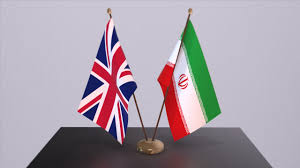
The relationship between Iran and the United Kingdom has been shaped by more than a century of political competition, economic interests, and geopolitical tensions. From colonial-era rivalries to modern diplomatic disputes, the interaction between these two nations reflects broader struggles for influence in the Middle East.
Although the two countries are not currently at war, their relationship has experienced periods of cooperation, confrontation, and strategic competition. Understanding the history of Iran–UK relations helps explain how global politics and regional power struggles have influenced their interactions.
Early British Influence in Iran
British involvement in Iran began during the 19th century when the British Empire sought to protect its interests in India and the Persian Gulf. Iran was strategically important because it sat between British-controlled territories and rival empires.
One notable conflict during this period was the Anglo‑Persian War (1856–1857). The war started when Iran attempted to assert control over the city of Herat, which Britain considered strategically important for protecting India. Britain eventually won the conflict and forced Iran to withdraw from Herat under the Treaty of Paris.
This war marked one of the first major confrontations between the two nations and showed the military and political power Britain held at the time.
Oil and Economic Disputes
In the early 20th century, oil became a major source of tension between Iran and the United Kingdom. British companies had significant control over Iran’s oil industry through agreements with the Iranian government.
The most famous example involved the Anglo‑Iranian Oil Company, which was heavily backed by the British government. The company controlled large portions of Iran’s oil production and profits.
In 1951, Iran decided to nationalize its oil industry, leading to a major legal and diplomatic dispute between the two countries. The issue reached the International Court of Justice in a case known as United Kingdom v. Iran. The court ultimately ruled that it did not have jurisdiction over the dispute.
This event deepened mistrust between Iran and Western powers, including Britain.
World War II and the Invasion of Iran
Another major historical event occurred during World War II when the United Kingdom and the Soviet Union invaded Iran in 1941.
This invasion, known as the Anglo‑Soviet invasion of Iran, was carried out to secure oil supplies and maintain supply routes to the Soviet Union during the war. The allied forces quickly occupied the country and forced the Iranian ruler to step down.
Although the occupation was temporary, it had long-lasting political consequences and reinforced Iranian fears of foreign interference.
Diplomatic Tensions in the Late 20th Century
Relations between Iran and the United Kingdom became especially tense after the Iranian Revolution in 1979. The revolution replaced Iran’s monarchy with an Islamic Republic, leading to major shifts in foreign policy.
During this period, diplomatic relations were frequently strained. One dramatic incident occurred in 1980 during the Iranian Embassy siege in London. Armed militants took hostages inside the Iranian embassy, leading to a famous rescue operation by British special forces.
Although the attackers were not acting on behalf of the Iranian government, the crisis became a major international news event.
Military and Strategic Comparison
Today, both Iran and the United Kingdom possess powerful but very different types of military capabilities.
United Kingdom
The United Kingdom is considered one of the world’s most advanced military powers. It is a member of the North Atlantic Treaty Organization and maintains strong alliances with countries such as the United States.
Key strengths of the UK military include:
- Advanced fighter jets and aircraft carriers
- Nuclear weapons capability
- Highly trained professional armed forces
- Global military bases and alliances
Iran
Iran has a different military strategy focused heavily on regional defense and asymmetric warfare.
Iran’s strengths include:
- Large missile arsenal
- Strong regional alliances and proxy forces
- Large military manpower
- Strategic location in the Middle East
Iran also controls access to important waterways such as the Strait of Hormuz, which is critical for global oil transportation.
Size and Geographic Differences
One important difference between the two countries is geography.
Iran is significantly larger than the United Kingdom. In fact, Iran’s territory is almost seven times larger than the UK, giving it more land and natural resources.
However, the UK has advantages in technology, global alliances, and naval power.
Modern Diplomatic Relations
In the 21st century, relations between Iran and the United Kingdom remain complicated but not openly hostile.
Key issues affecting relations include:
- Iran’s nuclear program
- Economic sanctions
- Regional conflicts in the Middle East
- Security concerns in the Persian Gulf
At times, diplomatic relations have been reduced or temporarily suspended due to political tensions. However, both countries continue to engage in negotiations and international diplomacy.
Could Iran and the UK Go to War?
A direct war between Iran and the United Kingdom is considered unlikely for several reasons:
- The UK is closely allied with Western military alliances.
- Iran focuses mainly on regional defense rather than global conflict.
- Diplomatic channels and international organizations help reduce escalation.
However, both countries could still find themselves on opposite sides of larger international conflicts involving other powers.
Conclusion
The relationship between Iran and the United Kingdom has been shaped by a long history of geopolitical competition, economic disputes, and strategic interests. From the Anglo-Persian War to modern diplomatic tensions, their interactions reflect the broader dynamics of global power politics.
While the two countries have experienced serious disagreements and conflicts in the past, today their relationship is mostly defined by diplomacy rather than direct military confrontation.
Understanding this history helps explain why Iran and the United Kingdom continue to view each other with caution while still engaging in international dialogue.